
Beetle Certificate & Wood Destroying Organisms Inspection in Cape Town, Western Cape
Book a certified entomologist to inspect every accessible timber on the property within a full 50 m radius and issue your beetle certificate for bond registration. Most sale agreements and lenders treat it as valid for 3 months.
Get a Free Beetle Certificate Quote — Fast
Tell us what you need and we’ll send your price now.
Prefer to talk? Call 071 293 2423
✔ Registered, Compliant & Accepted
Every beetle / WDO certificate we arrange is issued and signed off by a South African Pest Control Association (SAPCA)-registered entomologist, or a pest control operator registered with DALRRD under Act 36 of 1947 in line with recognised wood-destroying-organism inspection standards. The issuing professional’s registration number appears on your certificate, so it is fully verifiable and accepted by conveyancers and lenders. We only work with correctly registered entomologists — a certificate from an unregistered person is not valid.
A beetle certificate in Cape Town records a certified entomologist’s inspection of every accessible timber within a 50 m radius of the property, and most Cape Town sale agreements and many lenders require it before the transfer or bond is registered. The certificate is valid for three months. Budget about R750, within a R550 to R1,200 range depending on property size.
COC Certificate conducts Wood Destroying Organisms inspections across Cape Town, Western Cape. We have assisted property sellers, buyers, and estate agents in obtaining their Beetle Certificate on time and without surprises. With every inspection conducted by a certified entomologist or qualified pest control operator, we deliver clear, bankable clearance certificates that meet what Cape Town sale agreements and lenders ask for.
- Certified entomologists and registered pest control operators on every inspection
- Registered WDO inspections across Cape Town — for Cape Town property transfers
- Full 50-metre radius inspection of all exposed and accessible timber
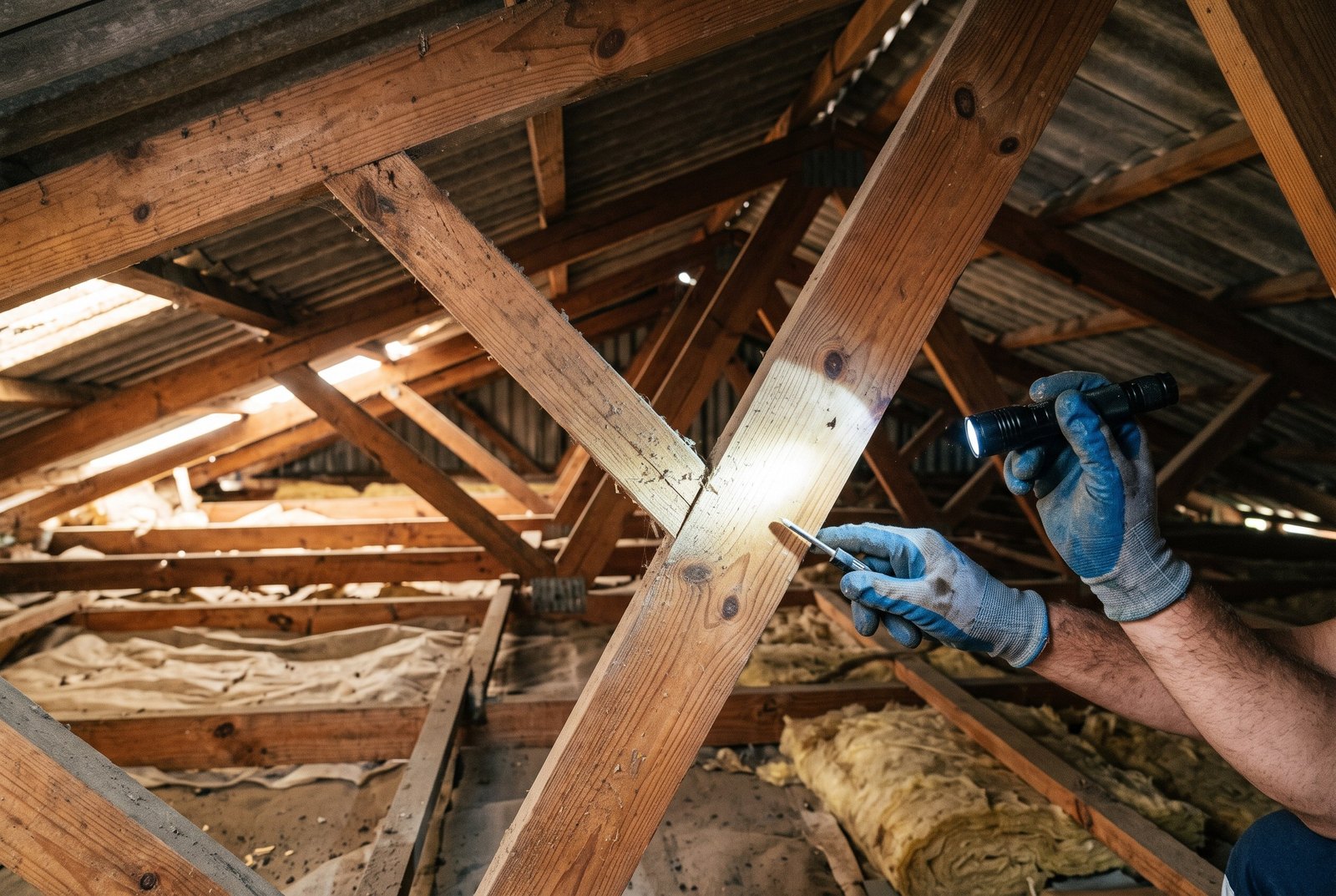
- UV torch inspection included for early-stage exit hole detection on all timber surfaces
- Moisture meter readings taken on all structural timber — elevated moisture indicates active infestation risk
- Certificates issued within the validity window — we understand the 3-month validity constraint
- Detailed written report includes photos of all findings — accepted by Cape Town conveyancers and lenders
- Treatment and re-inspection service available if active infestation is found — single point of contact
- R5 million public liability insurance on all inspections and treatments
- Serving all Cape Town suburbs including coastal high-risk areas: Atlantic Seaboard, False Bay, Helderberg
In short: a beetle certificate in Cape Town — the beetle CoC or wood destroying organisms (WDO) certificate — confirms that all accessible timber on the property is free of active infestation. It is issued by a certified entomologist or a pest control operator registered with DALRRD under Act 36 of 1947, and most Cape Town sale agreements and many lenders require one before the transfer or bond is registered.
What Is a Beetle Certificate (Entomologist Certificate)?
A Beetle Certificate — formally known as a Wood Destroying Organisms (WDO) Certificate or Wood Borer Clearance Certificate, and commonly called a beetle CoC — is an inspection report confirming that all exposed and accessible timber on a property is free from active infestation by wood-destroying insects and organisms. It is issued by a certified entomologist or registered pest control operator qualified to identify and assess the specific species of wood-destroying organism found along South Africa’s coastline.
Unlike the Electrical and Plumbing CoC, a Beetle Certificate is not directly mandated by national legislation. However, it is a contractual requirement in practice. Most Agreements of Sale in Cape Town include a beetle clause that makes the sale conditional on a satisfactory Beetle Certificate, and some lenders ask for one before a bond is registered on a coastal property. The clause names who orders the inspection, who pays for it and who carries out any treatment, so the wording of the Agreement of Sale decides what applies to your transfer.
The beetle clause has its roots in law that no longer exists. Heavy house-borer infestation of Cape Peninsula roof timbers was discovered in the early 1940s, according to the South African Wood Preservers Association (SAWPA), and regulations under the Forest Act followed from the late 1940s. The 1961 version, Government Notice R.658, defined “beetle” as the European house-borer (Hylotrupes bajulus) or the long-horned beetle Oxypleurus nodieri, and obliged owners to report an infestation in writing. The last of those regulations (R.602 of 1986) was repealed in 2009, so no owner has to notify the state today. The treated-timber rule survives: regulation A13(1)(b) of the National Building Regulations requires all timber used in the erection of a building to be treated against termite and wood borer attack in accordance with SANS 10005. The 1961 definition explains why many Western Cape beetle clauses still name Oxypleurus nodieri alongside Hylotrupes.
Inspections in Cape Town focus on woodborers such as the furniture beetle (Anobium punctatum) and the House Longhorn Beetle (Hylotrupes bajulus), which tunnel through roof trusses, floors and door frames. Cape Town’s mild, humid coastal climate creates near-ideal conditions for wood-boring beetles to breed and tunnel through structural timber.
Wood Destroying Organisms Found in Cape Town
The most structurally dangerous species in Cape Town. SAWPA’s wood-destroying insects poster records it on the coast, most active between Gqeberha and Cape Town. In South Africa the larvae spend 2 to 3 years in seasoned softwood (pine, spruce), according to the South African studies cited in Cannon’s 1982 doctoral thesis on the species, hollowing out rafters, purlins, and floor joists while leaving the surface intact. Exit holes: 6–10mm oval. Active infestations cause roofs and floors to fail catastrophically with little visible warning.
Known as the Furniture Beetle. Exit holes: 1.5–2mm round, with fine flour-like frass. Attacks both softwood and hardwood. Common in older wooden floorboards, skirting boards, and structural timbers in Cape Town’s Victorian and Edwardian housing stock (pre-1940s).
Attacks sapwood of hardwood species. Leaves very fine powder-like frass. Common in hardwood flooring, skirting boards, and new imported timber products. Typically found in newer properties using imported hardwoods for joinery and flooring. Exit holes: 1–2mm round.
Uncommon in the Cape Peninsula and far more common in KwaZulu-Natal. Build mud tubes from soil to timber. Can consume an entire roof structure in 3–5 years if unchecked. Identified by mud tubes on foundation walls or timber members, and hollow-sounding timbers on tapping.
Needs no soil contact, so it infests roof timbers, door frames and built-in furniture directly rather than tunnelling up from the ground. SAWPA records it on the coast from Gqeberha north to Richards Bay, with the highest occurrence around Durban, outside Cape Town’s usual range. Identified by hard ridged faecal pellets pushed out of small kick-out holes and often mistaken for sand. Exit holes: 1–2mm round.
What the Beetle Inspection Covers
Our certified inspectors examine all exposed and accessible timber within a 50-metre radius of the property boundaries. Inspection includes:
- Roof structure — rafters, purlins, battens, ridge beams, collar ties, wall plates
- Ceiling timbers and brandering (where accessible without damage)
- Structural floor joists and sub-floor timbers (where access hatch allows)
- Wooden floorboards, parquet, and strip flooring
- Door frames, window frames, skirting boards, and architraves throughout
- Wooden staircases, balustrades, and handrails
- Garden structures within 50m: pergolas, outbuildings, garden sheds, wooden fencing
- Timber cladding, fascia boards, bargeboards
- Built-in joinery (cupboards, shelving) accessible for inspection
Exclusions: Concealed timbers behind plaster (unless signs of infestation are visible at surfaces), inaccessible roof voids (noted in report), and moveable furniture items.
Our 5-Step Beetle Inspection Process
Beetle Certificate Cost in Cape Town (2026)
A beetle certificate in Cape Town costs from R550 for a flat or apartment — most homes budget R550–R1,200 depending on property size and certificate scope — with remediation charged only if faults are found. Bundle several certificates of compliance in one visit to save up to 22%. See the full price breakdown below.
| Property Type | Inspection + Certificate | Treatment Cost (if needed) |
|---|---|---|
| Apartment / Flat | R550 – R750 | R2,500–R8,000 |
| Standard house | R700 – R1,000 | R5,000–R15,000 |
| Large property / double storey | R900 – R1,200 | R8,000–R25,000+ |
| Multiple outbuildings | From R1,000 | Quoted on scope |
Treatment costs depend on species, severity, and method. All treatment quotes are fixed-price and include a 5-year warranty against re-infestation of treated timber.
Beetle and Electrical Certificates in Cape Town — Book Both Together
Most Cape Town sales need a beetle certificate and an electrical certificate of compliance. The Electrical CoC is required at every transfer, and plumbing, gas, electric fence and solar certificates are added where the property has those systems. Book the beetle inspection together with the other certificates your sale needs and bundle them in one visit to save up to 22%.
Compare every certificate on the CoC price list, estimate your total with the CoC cost calculator or see which compliance certificates your property transfer needs.
Frequently Asked Questions — Beetle Certificate Cape Town
Is a Beetle Certificate legally required to sell property in Cape Town?
Not by law, but in practice often yes. No national legislation requires it, but it is effectively compulsory in most Cape Town property transactions for two reasons: (1) most Agreements of Sale in Cape Town include a beetle clause as a suspensive condition of the sale; and (2) some lenders ask for a valid Beetle Certificate before registering a bond on a coastal property. A sale that carries a beetle clause cannot go through until a satisfactory certificate is produced.
How long is a Beetle Certificate valid?
3 months from the date of inspection is the period most Cape Town sale agreements and lenders work to, and no statute sets a fixed period. A new inspection is needed when the transfer runs past the period the agreement or the lender specifies, usually 3 months. We recommend obtaining the Beetle Certificate no more than 60 days before your expected transfer registration date.
What happens if active infestation is found?
The inspector provides a detailed report identifying the species, affected timber, and recommended treatment. Treatment — typically boron-based timber treatment, fumigation, or heat treatment depending on the species — is carried out by a SAPCA-registered company. A re-inspection follows treatment, and the clearance certificate is issued on confirmation of no active infestation. Treatment warranties of 5 years are standard.
Does a pass certificate mean the property has zero beetles?
A clearance certificate confirms no active infestation was found in accessible and exposed timber at the time of inspection. Old, inactive exit holes may be present without active infestation — this is normal in older Cape Town homes and does not fail the inspection. Concealed timbers behind plaster or in inaccessible voids are excluded and noted in the report. The certificate is valid for the date of inspection only and cannot guarantee future infestation.
Who pays for the Beetle Certificate — buyer or seller?
By convention and in most Agreements of Sale, the seller obtains and pays for the Beetle Certificate inspection. The cost of treatment, where infestation is found, is typically the seller’s responsibility under the terms of the sale agreement — though this is negotiable between the parties. Always verify the specific terms of your sale agreement before making any assumptions.
My house was built in 1965 and has a timber roof. Am I at high risk?
Not necessarily. The 1961 house-borer regulations (GN R.658, under the Forest Act) banned untreated soft timber in building work in defined districts including Cape Town, Wynberg, Simonstown and Bellville, and treatment had been compulsory in the Cape since the late 1940s. A 1965 roof was therefore meant to be built with treated pine. The highest risk of House Longhorn Beetle infestation sits in timber that missed treatment or was replaced later with untreated wood. We recommend booking an inspection at least 4–6 weeks before your planned listing date to allow time for treatment and re-inspection if needed.
Does my property need a Beetle Certificate even if it has a tiled concrete roof?
Yes — the timber roof structure (rafters, battens, purlins) under the tiles is still present and susceptible to infestation. Even properties with concrete slabs or metal sheeting roofs may have timber in ceiling brandering, door frames, flooring, and internal joinery. Most Cape Town properties contain enough timber to require a WDO inspection regardless of the external roof material.
What is the boron treatment method and is it safe?
Boron-based timber treatment (typically disodium octaborate tetrahydrate — DOT, sold under brands including Tim-bor and Boracol) is the most common treatment for structural timber in occupied homes. It is applied by injection into exit holes and brush application to all accessible timber surfaces. Boron is a naturally occurring mineral compound with very low mammalian toxicity — safe for occupants after the treatment has dried (typically 24 hours). Effective against all common beetle species and provides residual protection for 10–15 years.
Can structural damage from beetles be repaired?
Yes — in most cases, beetle-damaged timber can be repaired or reinforced rather than fully replaced, which is significantly more cost-effective. Sistering (adding a new timber member alongside a damaged one) is a common repair method for rafters and joists. Full replacement is only necessary when more than 50% of a timber member’s cross-section has been hollowed. A structural engineer’s assessment is recommended for any roof member where significant hollowing is suspected.
Is a beetle certificate the same as a beetle CoC?
Yes. “Beetle CoC” is the common informal name for a beetle certificate — other names are Wood Destroying Organisms (WDO) certificate and wood borer clearance certificate. It is the inspection report a certified entomologist issues confirming your property’s exposed timber is free of active wood-borer infestation, which Cape Town sale agreements and many lenders require before the bond is registered on a coastal property.
Does a sectional title unit need a beetle certificate?
Yes, when the Agreement of Sale carries a beetle clause. The inspection covers the timbers inside the unit. Timbers in common property, such as a shared roof, fall under the body corporate, so the buyer and seller should agree in writing whether the inspection extends to them and who arranges access.
Does a beetle certificate cover termites?
The beetle clause in the Agreement of Sale decides this. A beetle certificate is about wood-boring beetles, and termites or other wood-destroying organisms count only where the clause names them. Our WDO inspection checks for termite signs as well and the report records every sign it finds, so ask for termites to be named in the clause when they matter to your sale.
Beetle Certificate & Beetle CoC — Areas We Serve Near You
Our certified entomologists carry out beetle (WDO) inspections and issue your beetle CoC across the Cape Town metro and the wider Western Cape — with particular focus on the high wood-borer-risk coastal zones (Atlantic Seaboard, False Bay and the Helderberg). Find a beetle certificate inspection near you.
Book Your Beetle Inspection — Cape Town
Certified entomologists · Full 50m radius inspection · Accepted by Cape Town conveyancers and lenders · Full Cape Town metro