The 10 Most Common Electrical Defects Found During Cape Town CoC Inspections
Updated 2026 · 9-minute read · Western Cape CoC Certificate
Get a Free CoC Quote — Fast
Tell us what you need and we’ll send your price now.
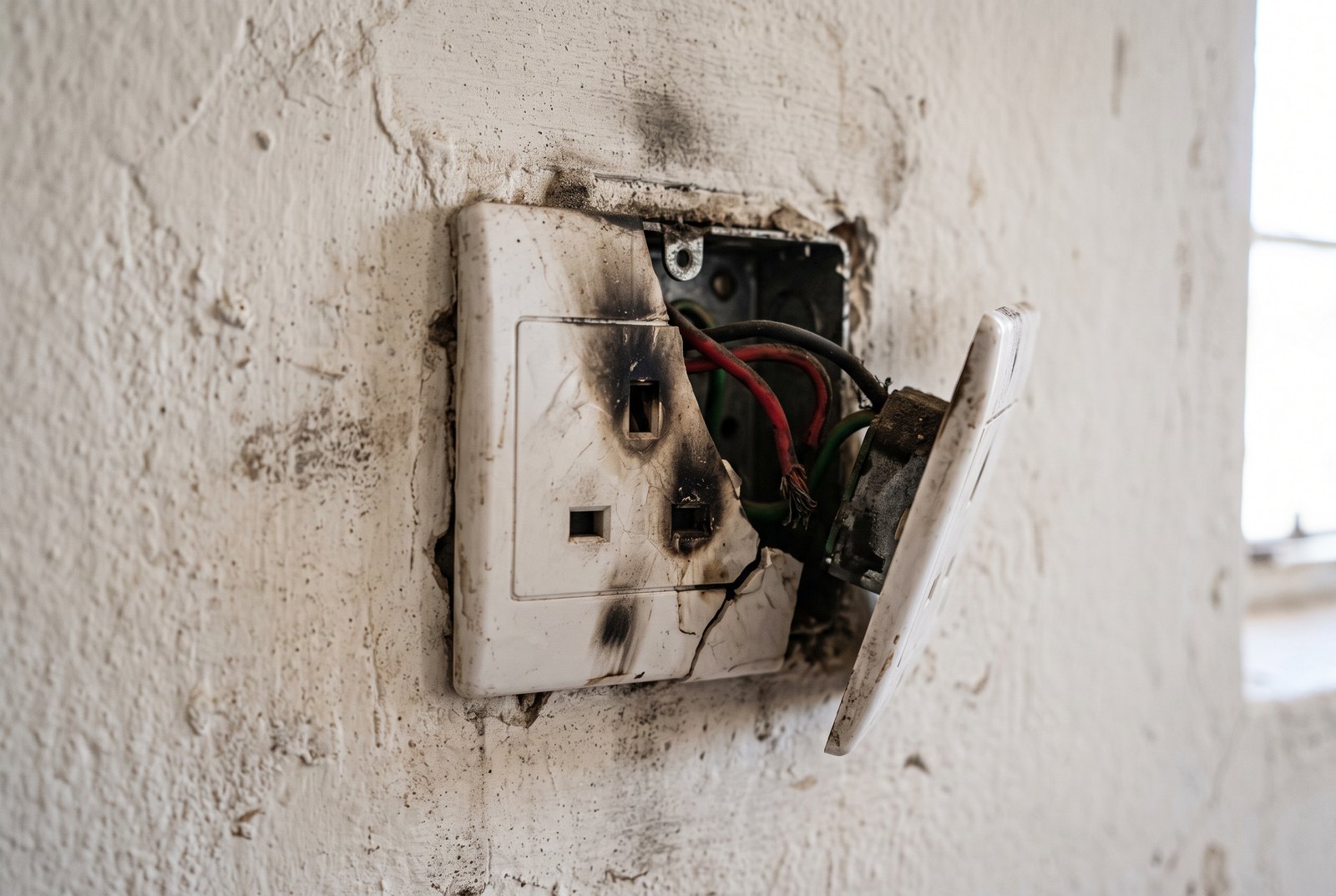
Defects that most often fail an electrical CoC.
Western Cape CoC Certificate has conducted Electrical CoC inspections in Cape Town. Our DoEL-registered inspectors use calibrated instruments including the Megger MFT1735 multifunction tester and Fluke 1587FC insulation resistance meter on every inspection. Based on our inspection data, approximately 78% of Cape Town homes require at least one remediation item before passing — and 34% have three or more defects. Knowing what to look for before the inspection can save time and money.
The 10 Most Common Defects (by Frequency in Cape Town)
1 No RCD / Earth Leakage Protection on Final Circuits — 62% of homes
SANS 10142-1 Clause 7.3.1 — All final circuits (sockets, lights, fixed appliances) must be protected by a residual current device (RCD) with a tripping current of ≤30mA. In older Cape Town homes (pre-2003), RCDs were not required and many distribution boards have never been upgraded.
How to spot it: Open your distribution board and look for a device labelled “RCD”, “RCCB”, or “Earth Leakage”. If you only see MCBs (miniature circuit breakers) with no RCD, this defect is almost certain.
Remediation cost: R800–R1,500 per RCD. Most homes require 1–3 RCDs. Total: R800–R4,500 depending on board configuration.
2 No Surge/Overvoltage Protection — 48% of homes
SANS 10142-1 Clause 7.3.3 — An SPD (surge protection device) or TVSS (transient voltage surge suppressor) must be installed at the main distribution board to protect the installation from lightning-induced surges. Cape Town’s summer thunderstorm season makes this a safety-critical requirement.
How to spot it: Look in your distribution board for a device labelled “SPD” or “Surge Arrestor”. If none is visible, this defect likely applies.
Remediation cost: R600–R1,200 to install a Type 2 SPD at the main board.
3 Inadequate Earthing / Earth Resistance Too High — 34% of homes
SANS 10142-1 Clause 7.5.1 — The main earth electrode (earth spike driven into the ground) must achieve a resistance of ≤1Ω when tested with a calibrated earth resistance tester. In sandy Cape Town soils (especially in the northern suburbs and coastal areas), achieving this resistance can require multiple earth spikes.
How to spot it: Inspect the earth rod — a copper spike typically driven into the soil near the main board. Signs of corrosion, a very short rod, or no rod at all are red flags.
Remediation cost: R400–R900 for additional earth rods and bonding conductors.
4 Non-Compliant Wiring in Outbuildings or Additions — 29% of homes
SANS 10142-1 Clause 7.1 and 7.2 — Any wiring done in an outbuilding, garage conversion, granny flat, or home addition that was installed without a registered electrician often fails multiple clauses: wrong cable type, no conduit, no RCD protection, and no earth continuity. This is the most expensive defect to remedy.
How to spot it: Look for wiring that appears to be done differently from the rest of the house — flat twin-and-earth run surface-mounted without conduit, extension cords used as permanent wiring, or sub-boards without proper enclosures.
Remediation cost: R1,000–R4,500 depending on the scale of the outbuilding’s installation.
5 Distribution Board Requires Full Replacement — 22% of homes
SANS 10142-1 Clause 7.2 — Boards manufactured before approximately 1990 often fail multiple modern standards: no RCD slots available, asbestos-backed boards, incorrect cable entry, no bus bar rating label, or mechanical deterioration. These boards cannot be upgraded incrementally — they require full replacement.
How to spot it: Very old wooden-backed boards, boards with ceramic fuse holders instead of MCBs, or boards where adding a RCD simply isn’t physically possible.
Remediation cost: R3,500–R8,000 for a full board replacement including all breakers, RCDs, and SPD.
6 Low Insulation Resistance (Below 1MΩ) — 18% of homes
SANS 10142-1 Clause 7.4.2 — All circuits must have an insulation resistance of at least 1MΩ when tested with a 500V DC insulation test (performed with instruments like the Megger MFT1735 or Fluke 1587FC). Degraded insulation is a fire risk and is common in aluminium wiring installations from the 1970s–1980s, or in circuits that have been exposed to moisture.
Remediation cost: R800–R5,500 depending on which circuits fail and whether rewiring is required.
7 Incorrect Polarity at Sockets or Switches — 15% of homes
SANS 10142-1 Clause 7.4.1 — The live (phase) and neutral conductors must be connected to the correct terminals at every socket and switch. Reversed polarity means live voltage is present at the neutral terminal — a serious shock risk invisible to the naked eye, detectable only with testing equipment.
Remediation cost: R80–R200 per socket. Total: typically R500–R2,000 for a complete polarity rectification.
8 No Main Switch / Isolator at Distribution Board — 13% of homes
SANS 10142-1 Clause 7.2.3 — A main isolator or main switch must be present at the distribution board to allow the entire installation to be safely de-energised. Some older boards were installed without a main switch, relying entirely on individual circuit breakers.
Remediation cost: R600–R1,400 to add a main isolator switch to an existing board.
9 Unapproved DIY Electrical Work — 11% of homes
Multiple SANS 10142-1 clauses — Homeowners and handymen frequently add sockets, lights, or garden circuits without a registered electrician. This work often fails on: incorrect cable type (e.g., PVC oval conduit cable used in exposed runs), no earthing conductor, wrong breaker size, and exposed terminations.
Remediation cost: R800–R4,500 depending on the scope of non-compliant work found.
10 Non-Compliant Solar / Inverter Integration — 9% of homes (rapidly increasing)
SANS 10142-1 Clause 7.2 and NRS 097-2-1 — With the explosion of load-shedding-era solar installations from 2020–2024, many systems were installed by unregistered or under-qualified installers. Common failures: DC isolator not correctly sized, battery connection not fused, inverter AC output not correctly integrated with the distribution board, and no anti-islanding protection.
Remediation cost: R1,500–R8,000 for wiring compliance. Additional R3,500–R12,000 if the inverter itself does not meet SANS 1741 / IEC 62109-2 certification requirements.
Book an Electrical CoC Inspection in Cape Town
Our DoEL-registered inspectors use calibrated Megger and Fluke test instruments on every inspection. Defect report issued same day.
What are the most common electrical defects found during a CoC inspection?
The most common are missing or faulty earth-leakage protection, incorrect distribution-board wiring, poor earthing and bonding, and non-compliant plug and lighting circuits.
Do electrical defects have to be fixed before I can sell?
Yes. The electrical CoC cannot be issued until the defects are repaired and the installation passes re-inspection.
How much do electrical repairs usually cost?
It depends on the fault – minor items are inexpensive, while distribution-board rework costs more. The inspector quotes before carrying out any repairs.
Most of these defects are found and corrected in a single visit. Booking through our Cape Town CoC inspections includes the re-test after the repair.