
What is SSEG Registration and Do You Need It When Selling a Solar Property in Cape Town?
Updated 2026 · 8-minute read · COC Certificate
Get a Free CoC Quote — Fast
Tell us what you need and we’ll send your price now.
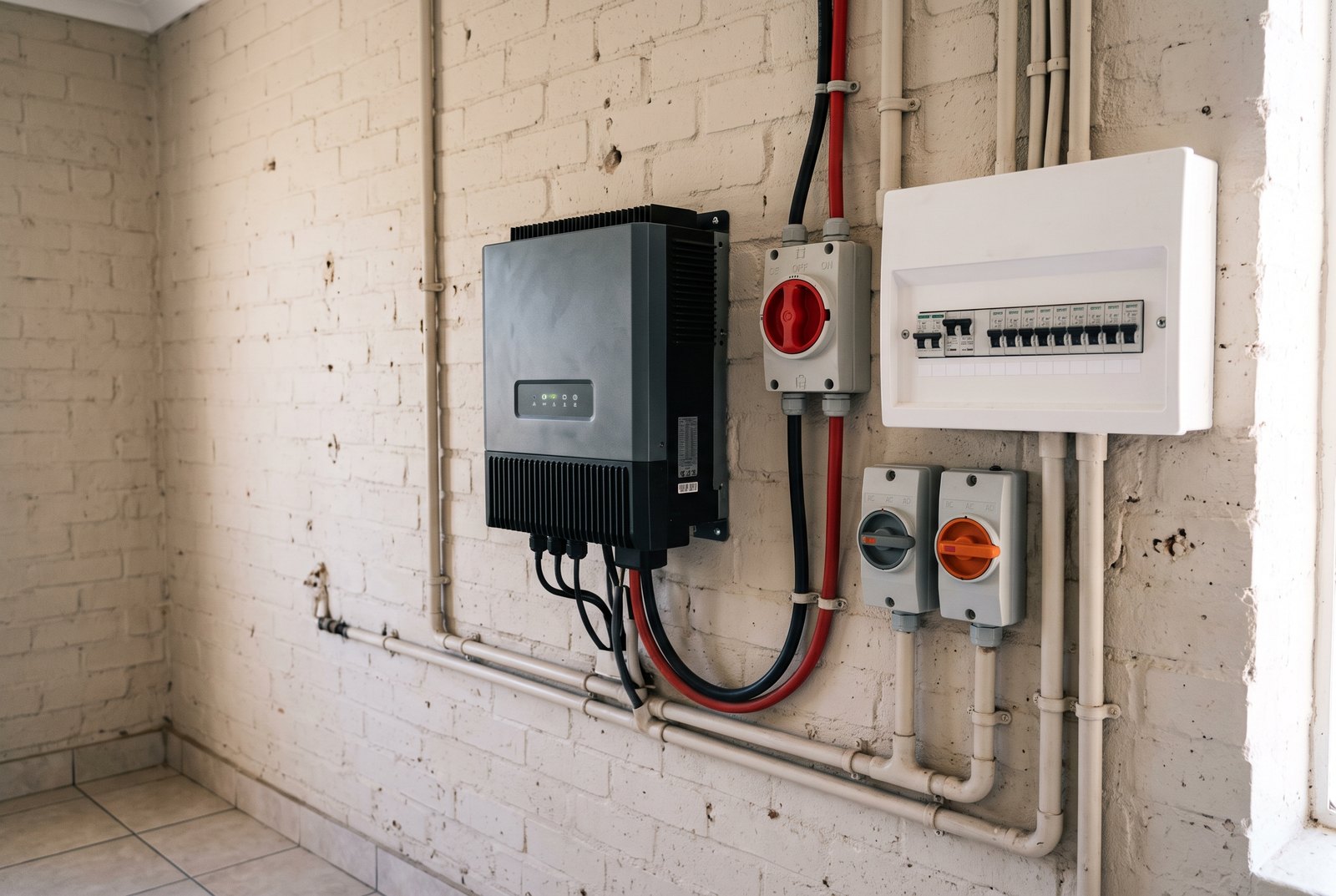
COC Certificate has been issuing Solar CoCs and managing SSEG registrations in Cape Town, and has completed compliance inspections including thousands of solar PV systems since the widespread adoption of rooftop solar accelerated from 2020 onwards. The SSEG requirement is now one of the most common compliance gaps we find in Cape Town property sales — and one of the most costly to rectify after transfer if missed. This guide explains exactly what SSEG is, which properties are affected, and what sellers must do.
What is SSEG?
SSEG stands for Small-Scale Embedded Generation. It is the City of Cape Town’s formal registration and approval system for any electricity generation system that is connected to both a renewable energy source (solar panels, wind, etc.) and the municipal electricity grid.
When your solar system is grid-tied — meaning the inverter connects to both your solar panels AND the City of Cape Town’s electrical network — the City treats your property as a mini power station. Before you can operate, you must register this system through the SSEG process and meet the technical requirements of the City’s SSEG By-law and the NRS 097-2-1 grid connection standard.
Which Systems Require SSEG Registration?
| System Type | Grid-Tied? | Solar CoC Required? | SSEG Registration Required? |
|---|---|---|---|
| Grid-tied solar (export to grid) | Yes | Yes | Yes |
| Grid-tied solar (no export / zero-export inverter) | Yes | Yes | Yes — even with zero-export |
| Battery backup only (no solar, grid-tied inverter) | Yes | Yes | Yes |
| Completely off-grid solar (no grid connection at all) | No | Yes | No |
| Solar geyser (thermal, not PV) | No | No | No |
* A “zero-export” inverter is still grid-connected and still requires SSEG registration — the City needs to know about all grid-connected generation, regardless of export direction.
What Happens If a Property With Solar Has No SSEG Registration?
The consequences of an unregistered SSEG system are significant — both during a property sale and in general:
- For the seller: The property cannot legally transfer without documentation confirming the solar system’s compliance status. A Solar CoC alone is insufficient — the SSEG registration must also be in order. If the City of Cape Town discovers an unregistered system during an inspection, the owner can be ordered to disconnect the system from the grid immediately.
- For the buyer: Without SSEG registration, the buyer cannot legally export power to the grid, cannot claim feed-in tariff payments, and is operating an illegal installation. If discovered, the buyer will be required to register at their own cost — typically R850–R1,500 for the registration application, plus any required rectification to meet SSEG technical requirements (potentially R3,500–R12,000 for non-compliant systems).
- For the bank: Mortgagee banks are increasingly requesting confirmation of SSEG registration status as part of their bond approval process for properties with solar installations.
The SSEG Registration Process for Property Sales
- Confirm current SSEG status — check whether the system is already registered. If the original installer completed SSEG registration, there will be a City of Cape Town SSEG approval letter in the property’s documentation. We can verify this for you in 30 minutes.
- Solar CoC inspection — a DoEL-registered electrician tests all DC wiring, inverter installation, AC integration, and protection devices against SANS 10142-1. Cost: R1,500–R3,500 depending on system size.
- SSEG application / transfer — if the system is already registered, the registration is transferred to the new owner’s name through the City’s online SSEG portal. Cost: R850–R1,200 for transfer. If the system has never been registered, a new registration application is submitted — process takes 2–6 weeks and costs R850–R1,500 in application fees plus potential grid-connection compliance upgrades.
- Certificate package delivery — we provide the Solar CoC, SSEG approval letter, and (for new registrations) the City of Cape Town technical approval letter in a single package to your conveyancer.
Common Inverter Brands in Cape Town and SSEG Implications
Grid-tied — SSEG required. Widely used; City-approved configuration available. Most existing Victron installs can be SSEG-registered without hardware changes.
Grid-tied — SSEG required. Very common in Cape Town from 2022 onwards. Generally SSEG-compliant with standard firmware. Confirm anti-islanding protection is enabled.
Grid-tied — SSEG required. Industry-standard brands; typically SSEG-compliant from factory. Certificate of conformance usually available from manufacturer.
Grid-tied — SSEG required. Affordable brands; some older firmware versions require updates to meet City of Cape Town SSEG technical requirements.
If configured purely off-grid (no grid input connected), SSEG registration is not required — but a Solar CoC is still required for the DC/AC wiring.
High SSEG risk. City of Cape Town requires IEC 62109-2 / SANS 1741 certification for the inverter. Uncertified inverters may need replacement — budget R8,000–R25,000.
Selling a Solar Property in Cape Town?
We handle the Solar CoC and SSEG registration/transfer simultaneously — one engagement, one invoice, delivered to your conveyancer.
Book a Compliance Inspection
Frequently Asked Questions
What is SSEG registration?
Do I need SSEG registration to sell a property with solar?
Is a solar CoC the same as SSEG registration?
Solar and SSEG paperwork almost always travels with the electrical certificate. Both are handled through our Cape Town CoC inspections.